
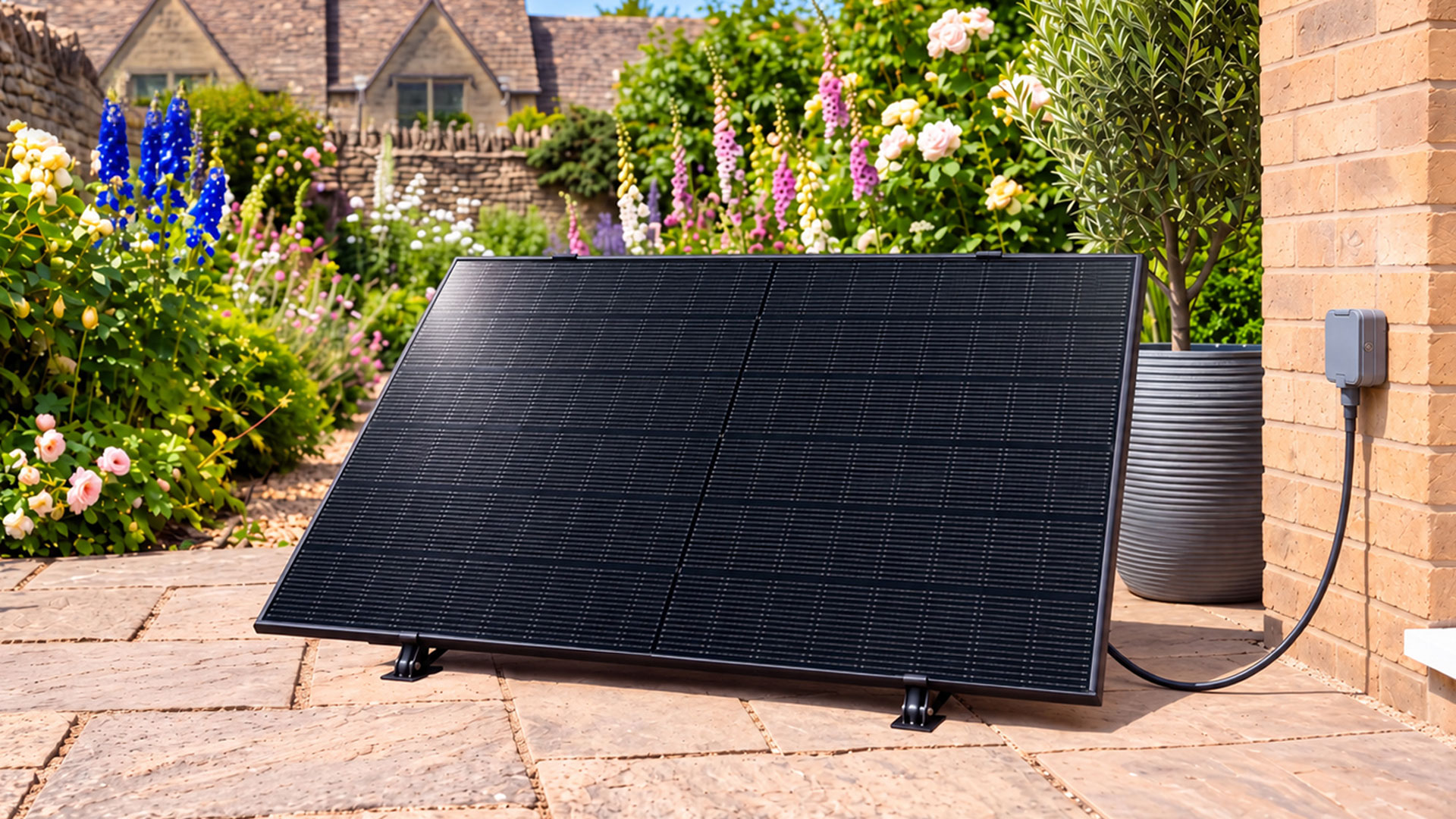
Plug-in solar is opening up new ways for homeowners to generate their own electricity without committing to a conventional rooftop solar installation.
Designed to make small-scale solar more accessible, these systems can be an attractive option for homes where a larger installation is not practical. But with more products entering the market, choosing the right kit means looking beyond headline wattage and price.
The quality of the solar panel, microinverter, mounting system, monitoring technology and after-sales support all matter. Here’s what to look for when comparing plug-in solar kits and how Perlight PowerPlug brings these elements together.
Start with the solar panel
The panel is where your electricity generation begins, so its technology and construction deserve careful consideration.
Perlight PowerPlug uses Perlight solar modules, with configurations featuring modern N-type TOPCon cell technology. TOPCon is designed to deliver high conversion efficiency, helping panels generate more electricity from the available sunlight.
When comparing panels, look at cell technology, rated power, efficiency, product certification and warranty terms. The exact specifications will depend on the module supplied with your chosen kit, so always check the product datasheet.
A compact solar system is still a long-term investment. Choosing a well-engineered panel is an important first step towards getting lasting value from it.
Look beyond the panel to the microinverter
Solar panels generate direct current (DC) electricity. A microinverter converts this into alternating current (AC) for use within the home.
It is one of the most important components in a plug-in solar kit, influencing conversion efficiency, grid interaction and access to performance data.
PowerPlug incorporates the APsystems EZ1-M microinverter. According to APsystems’ published specifications, it offers peak conversion efficiency of 96.7%, nominal maximum power point tracking (MPPT) efficiency of 99.5%, two independent MPPT inputs, Wi-Fi and Bluetooth connectivity, and an IP67-rated enclosure.
These features help make the system efficient, connected and suitable for outdoor environments when installed as instructed.
The takeaway? Don’t judge a kit by panel wattage alone. Consider how effectively its power electronics convert and manage the energy the panel generates.
Make UK compliance and safe installation a priority
Plug-in solar equipment connects to a home’s electrical installation, making electrical safety and grid compatibility essential considerations.
Since 27 August 2026, compliant plug-in solar devices have been permitted for sale and use in Great Britain under the applicable regulatory framework. Products must meet the relevant requirements, including the government’s interim product specification.
Engineering Recommendation G98 also sets out relevant requirements for connecting fully type-tested micro-generators to the electricity network. The relationship between G98 and the specific plug-in solar requirements should be assessed against the exact product and installation.
Before buying, check the documentation and relevant register entry for the exact kit. An inverter certificate alone does not establish that the complete kit meets all applicable requirements.
Mounting matters just as much. The support structure must be appropriate for the location, securely installed and suitable for the environmental conditions. Follow the manufacturer’s instructions and check whether additional fixings or ballast are required.
PowerPlug offers different mounting packages, including All-in-One and balcony/facade configurations, depending on the model. The suitability of each option depends on the installation location and the manufacturer’s requirements.
Choose a system that’s easy to monitor
Generating electricity is only part of the experience. Being able to see how your system performs makes it easier to understand what it is producing.
The APsystems EZ1 platform includes Wi-Fi and Bluetooth connectivity and supports the AP EasyPower app. This allows users to view generation data and access monitoring features, helping them understand system performance after installation.
Monitoring can also be useful when investigating unexpected changes in output. Actual generation will still depend on factors such as sunlight, orientation, shading and weather.
For homeowners new to solar, straightforward monitoring can make the technology easier to understand and live with.
Consider the support behind the product
A good solar kit should offer more than an appealing specification. Clear installation guidance, accessible technical information, transparent warranties and reliable after-sales support all contribute to the ownership experience.
PowerPlug combines Perlight solar module technology with APsystems microinverter technology and a coordinated mounting solution. This brings key components together in one product offering, rather than leaving customers to select unrelated parts independently.
Before purchasing any kit, check the warranty terms for each component, who provides support and what assistance is available if you have questions about setup or monitoring.
These details may not be as eye-catching as a wattage figure, but they can make a real difference over the life of the system.
Why the complete system matters
Choosing a plug-in solar kit isn’t simply about finding the biggest panel or the lowest price. It’s about finding the right balance of generation technology, power electronics, compliance, mounting, monitoring and support.
That’s the thinking behind Perlight PowerPlug.
By combining Perlight solar technology with APsystems microinverter technology and a purpose-designed mounting solution, PowerPlug offers homeowners a considered approach to small-scale solar generation.
For those looking to take their first steps towards generating their own electricity, the right system should make solar easier to understand and more straightforward to integrate into everyday life – without compromising on the engineering behind it.


