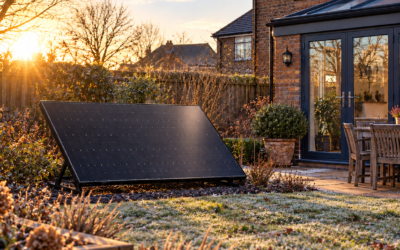
As the solar industry continues to evolve, plug-in solar is emerging as a new, cost-effective and flexible way to harness solar energy in the UK. Following its approval for use in the UK on 27 August, the Perlight Powerplug is among the first models to meet the required compliance and solar specifications.
Although plug-in solar is a relatively new concept in the UK, it is already established in other parts of Europe. This guide provides the essential guidance and safety precautions you need to confidently set up, use and maintain your Perlight Powerplug, helping you get the most out of your system safely and effectively.
Choosing a compliant Plug-In Solar Kit:
When selecting a plug-in solar kit, it is important to ensure that the product meets the UK Government’s Interim Product Specification, which outlines the technical and safety requirements for plug-in solar devices (Department for Energy Security and Net Zero, 2026).
It is essential to look beyond the plug itself and consider the compliance of the complete system. A suitable kit should be designed for the UK market, fitted with a BS 1363 plug and supplied with clear instructions covering safe installation, operation and maintenance. However, a UK-standard plug alone is not proof of compliance. Always review the manufacturer’s documentation to verify that the product meets the relevant requirements before making a purchase.
This is where choosing an established solar specialist matters. With over 20 years of experience in the solar industry, Perlight brings its expertise to the Powerplug range, combining solar technology with a product designed for the UK market. Each kit is backed by a 15-year warranty, offering long-term reassurance alongside the importance of choosing a product with the appropriate compliance documentation.

Permissions and Planning requirements
If you are a tenant, leaseholder or resident in a managed building, you may need permission before installing your plug-in solar system, particularly if drilling into walls, attaching equipment to a balcony or fitting an external socket. Check with your landlord or building management before proceeding.
The kit includes a 4-metre cable, which will influence where the system can be positioned. Depending on your property and installation, planning permission or other approvals may also be required. For further guidance, see the relevant planning guidance here.
Location suitability
A suitable external socket may be required to connect your plug-in solar system. The Powerplug must be connected directly to an appropriate socket, not an extension lead. Any outdoor socket must be weatherproof and installed by a qualified electrician. The socket must also be on a circuit separate from lighting and hardwired appliances, such as boilers or cookers.
Mounting and security
Ensure your panels are securely mounted using the manufacturer’s approved brackets and fixings. Correct installation helps keep the panels stable and reduces the risk of them becoming loose or dislodged.
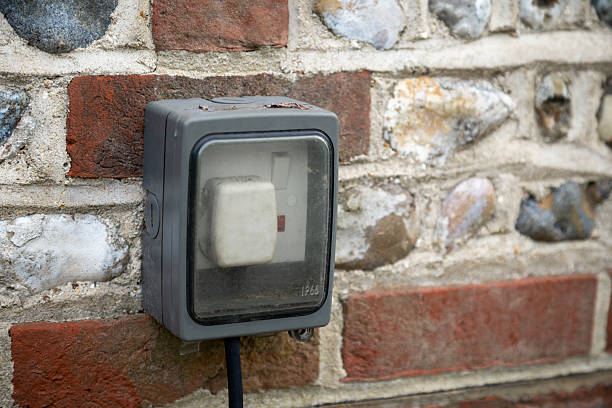
A close-up view of an outdoor electrical socket with a protective plastic cover mounted on a brick wall. The image highlights the details of the outlet, making it suitable for concepts related to electricity, home improvement, construction, maintenance, or safety. The textured brick background provides contrast and emphasizes the practical and functional aspect of the installation.
Choosing the right location
For the best performance, position your panels in an unshaded, south-facing location wherever possible. East- and west-facing panels can still generate electricity, although their output may be lower depending on the conditions. Use your monitoring app to track energy generation and check that your system is performing as expected.
Fire safety considerations
Before installing your system, consider how it may affect your building’s fire safety requirements. Regulations and guidance vary across the UK, so check with your building manager or relevant authority before proceeding. Additional care is particularly important in buildings with combustible cladding or ongoing fire-safety remediation, where specific restrictions or precautions may apply.
Electrical Safety
Have your electrical installation inspected periodically by a qualified electrician – generally every 10 years for homeowners and every 5 years for rented properties.
Seek professional advice if your fuse box uses older rewireable fuses, you are unsure about your wiring’s condition, a new socket is required, or if your solar system exceeds 960W.
For safety, never connect the Powerplug to an extension lead or adaptor, or share a socket with high-power appliances. Always follow the supplied installation instructions and use only the manufacturer’s specified microinverter and cables, as these components have been tested to work together.
Final Safety Checks
Before using your Perlight Powerplug, make sure your installation meets the relevant safety and grid connection requirements. Under the applicable rules, you should not connect multiple plug-in solar systems to your home without checking the requirements and obtaining any necessary approval from your Distribution Network Operator (DNO).
For continued safe operation, inspect your panels and mounting fixings periodically, particularly after strong winds or storms. Always use the supplied, manufacturer-approved components and never modify the plug, cables or microinverter, as this may compromise the system’s safety and compliance.
Finally, check with your home insurer whether your planned installation needs to be declared or meets the terms of your policy.
By following the guidance in this article and the instructions supplied with your kit, you can help ensure your Perlight Powerplug is installed and used safely. If you are unsure about any aspect of the installation, consult a qualified electrician before proceeding.